A Modern Record of Lewis’s Woodpecker Nesting in the Umpqua Basin, Southwest Oregon

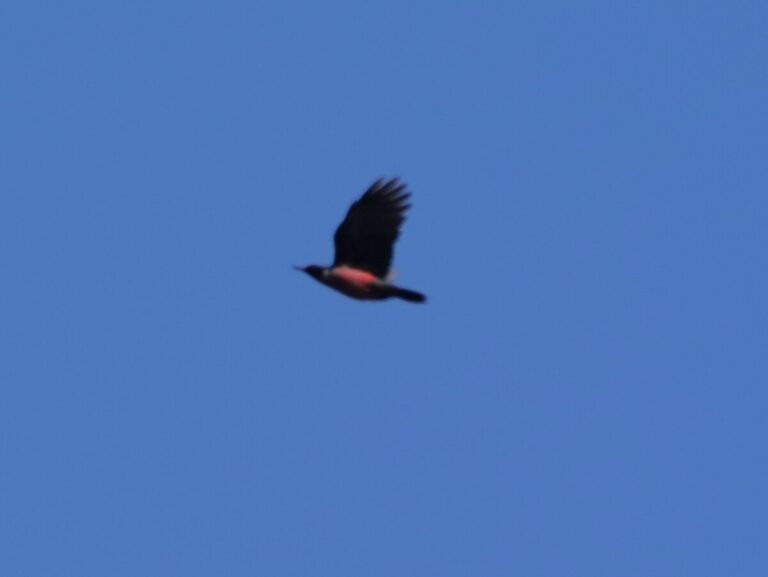
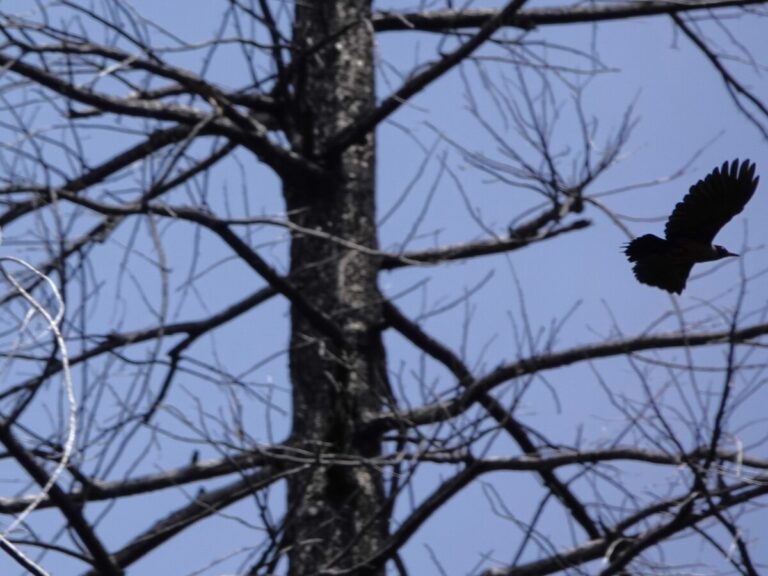
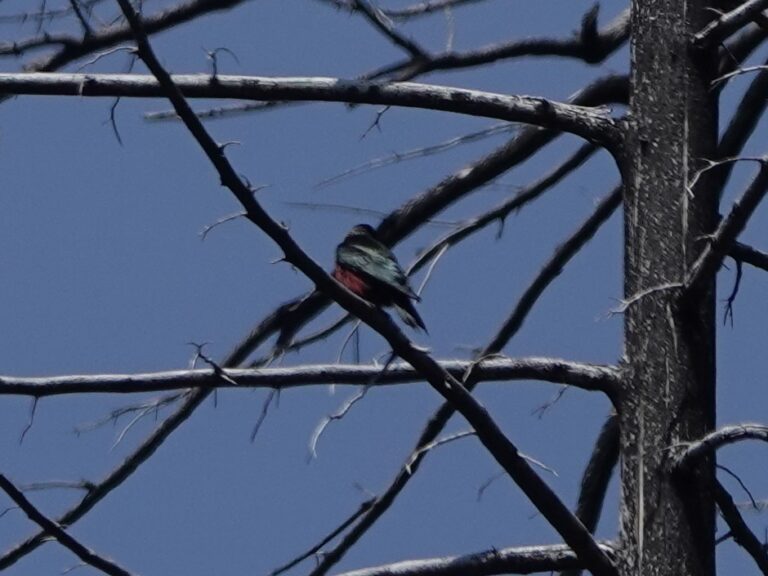
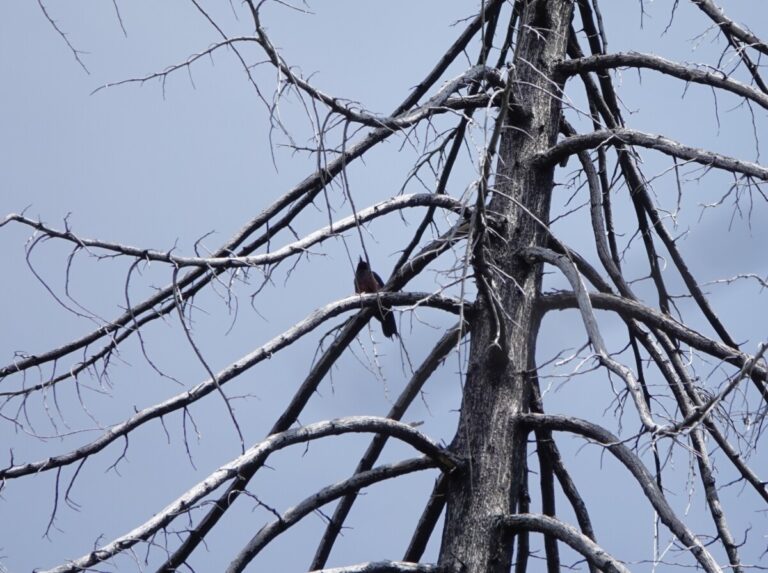
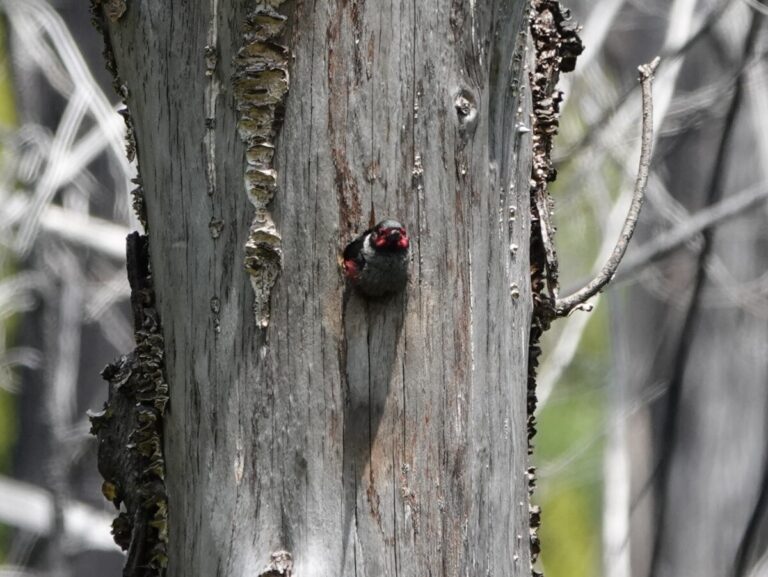
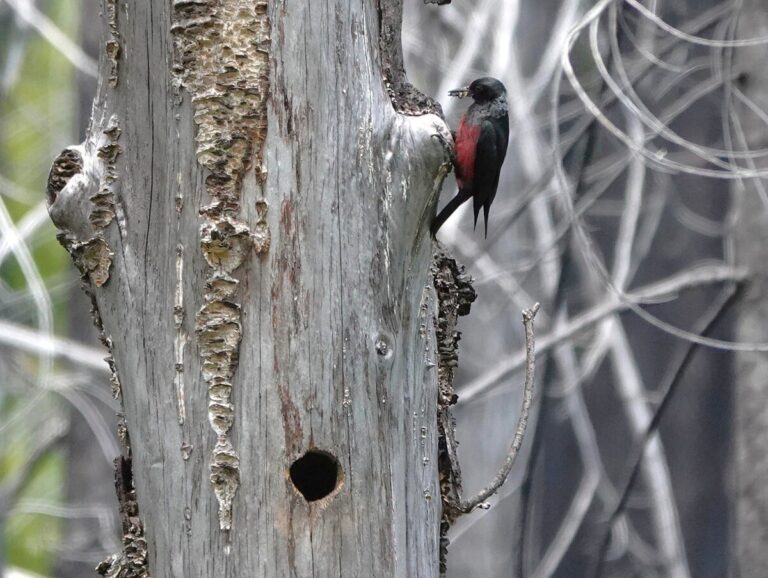
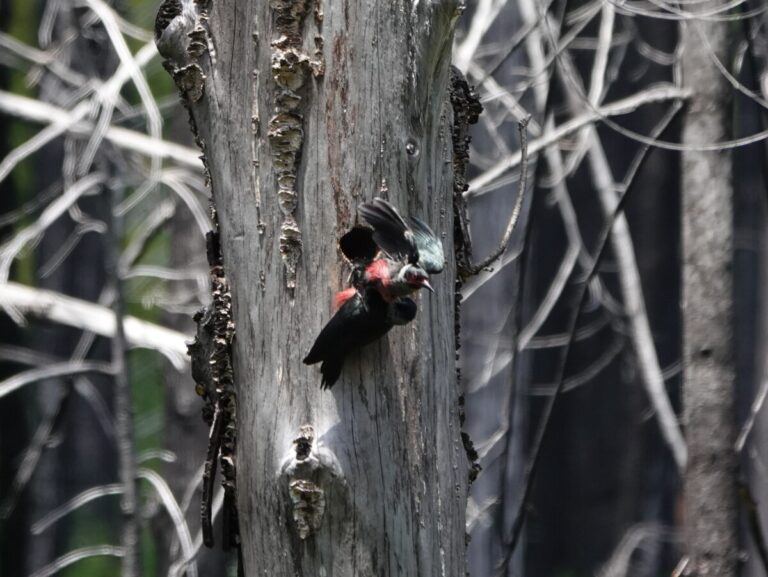
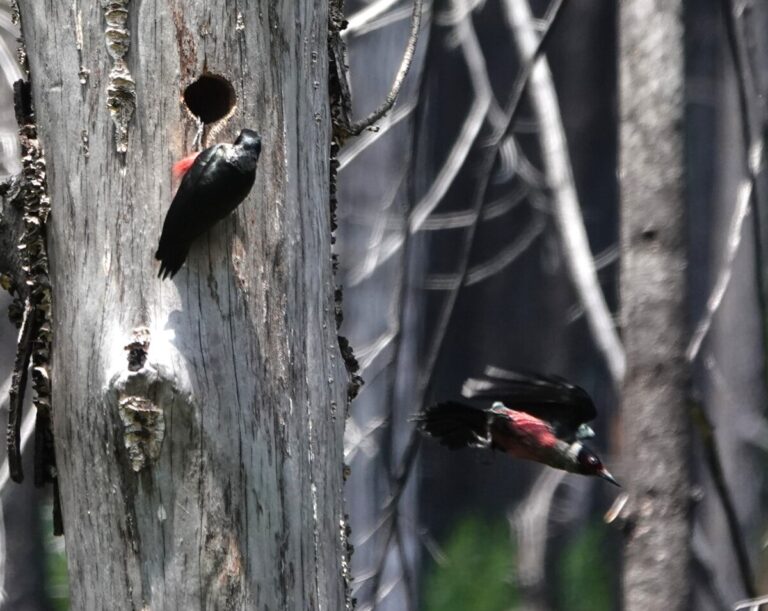
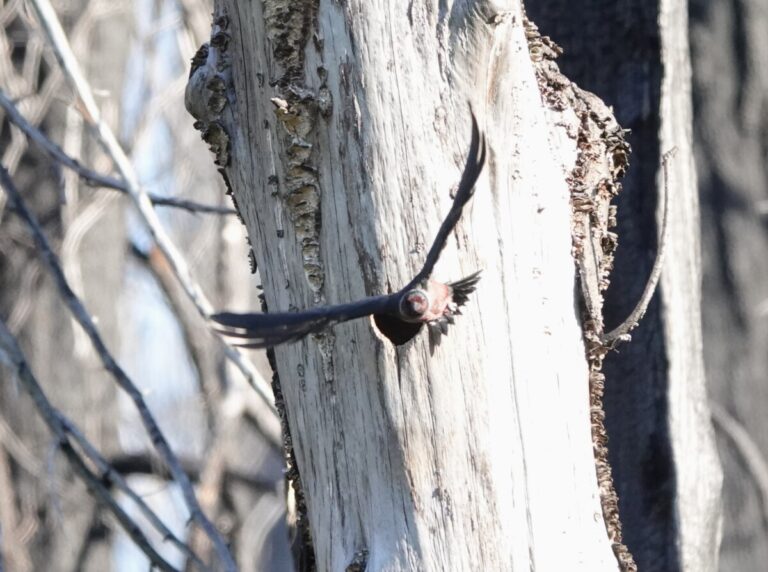
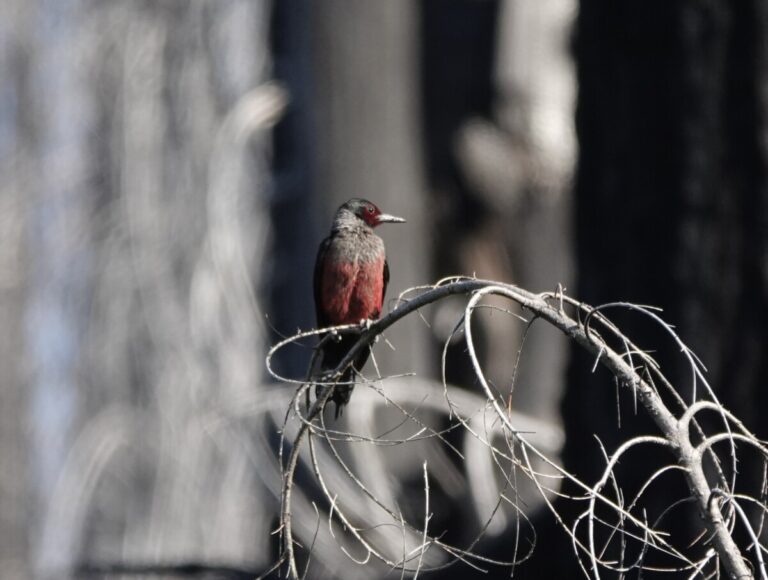
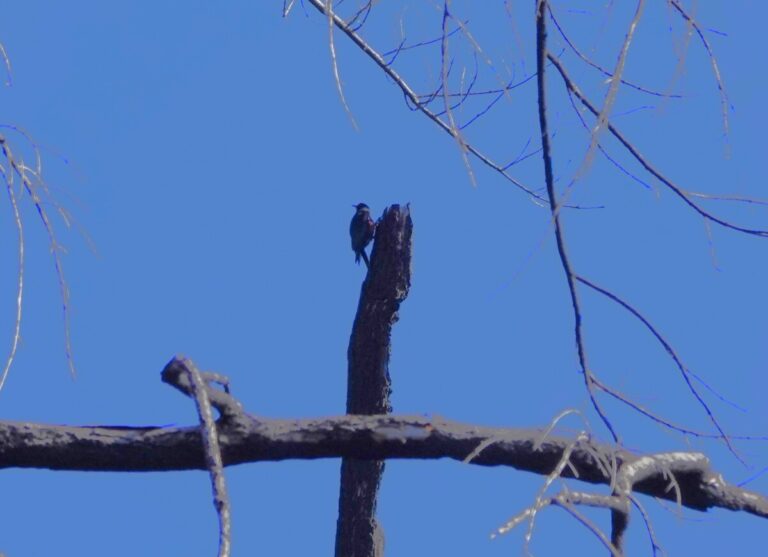
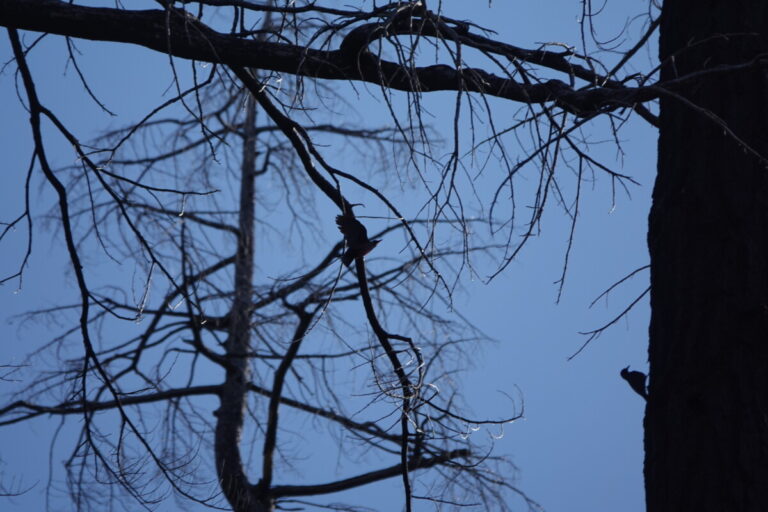
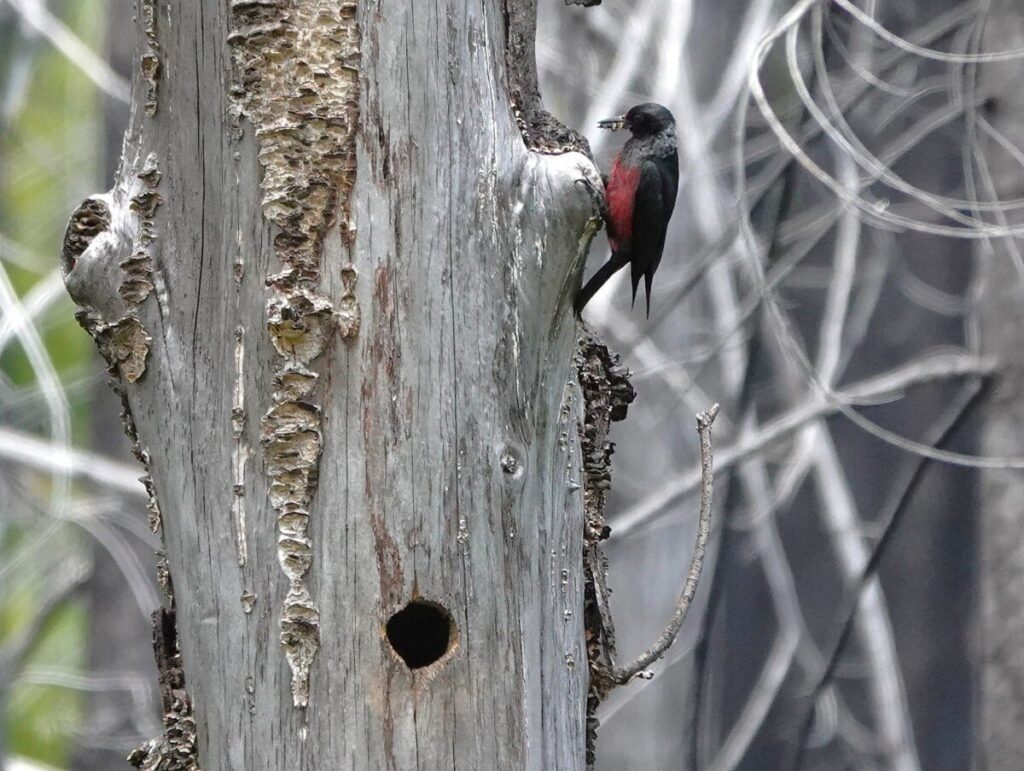
Featured Photo: An adult Lewis’s Woodpecker brings food for nestlings hidden in a tree cavity adjacent to Kelly Creek, a tributary of Rock Creek, within the Archie Creek burn area, east of Glide, Oregon, June 23, 2025.

A Brief History

In the early 1900s, Lewis’s Woodpeckers were reported to be a “summer resident in every part of [the] state,” (Gabrielson and Jewett 1940). Substantial declines in Oregon were noted beginning in the mid-1960s and no nesting has been recorded in the Willamette Valley since 1977 (Gilligan et al. 1994). Sauer et al. (2019) reported a 48% range-wide population decline 1966-2019 based on Breeding Bird Survey data and numerous agency and organizational reports express concern for the Lewis’s Woodpecker (USFWS 2021, ODFW 2021, NABCI 2025).

As of this writing I have not yet found any detailed historical accounts of Lewis’s Woodpecker in the Umpqua Basin; therefore, the assumption of their former breeding presence here is based solely on the general historical accounts cited above. I have begun reading through Ira Gabrielson’s diaries 1931-1939 (Smithsonian Institution Archives, RU 7319), which may contain some reference to Lewis’s Woodpecker in the Umpqua Basin, but it may take some time to complete that effort.

Regarding the non-breeding season, from historical times through the present day, Lewis’s Woodpeckers have continued as variably uncommon to rare spring and fall migrants–mostly in the valley foothills to the high Cascades–and variably uncommon to rare wintering birds in oak savannah, particularly near North Bank Road east of Roseburg and Mildred Kanipe Park northeast of Oakland (Hunter et al. 1998, pers. obs., eBird records).

An Account of the Summer 2025 Nest

On June 14, 2025, I participated in a field trip with a group of birders led by Bureau of Land Management wildlife biologist Liz Gayner. The goal was to visit several sites within the Archie Creek burn complex east of Glide, Oregon, which had burned over 130,000 acres in 2020, and observe the bird life present there. At one particular blackened old-growth stand at the upper reaches of Kelly Creek, we noticed two Lewis’s Woodpeckers flycatching from the tall remnant fire-scorched trees. Eventually, they flew southwest and out of sight. One of the same or another was seen briefly about an hour later. In the same stand was an interesting snag-top Red-tailed Hawk nest with three fluffy white nestlings which garnered much of our attention. This was the last stop of the trip and most of us left from that location having enjoyed a beautiful day and a variety of birds.

On my way home from the field trip, the mid-June date and the behavior of the Lewis’s Woodpeckers occupied my mind. Could they be nesting? Rather than just continue to wonder, I wanted to answer that question. I decided to return to the site to see if the Lewis’s Woodpeckers were still there.

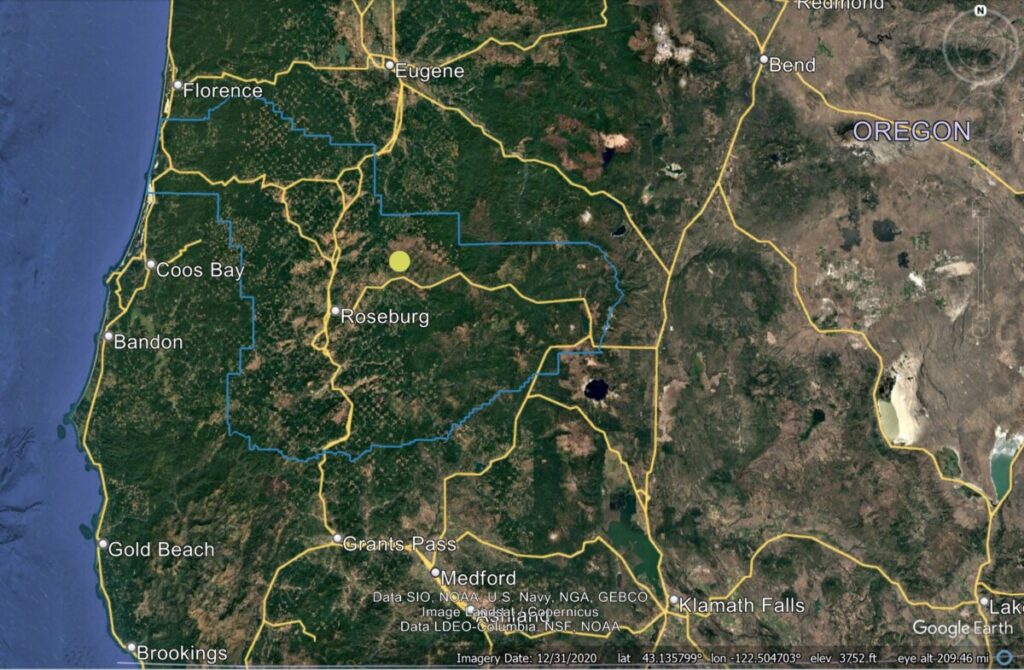
Location of the burned old-growth stand (yellow dot) where the Lewis's Woodpeckers were observed, in the context of Douglas County (blue outline) in southwest Oregon.

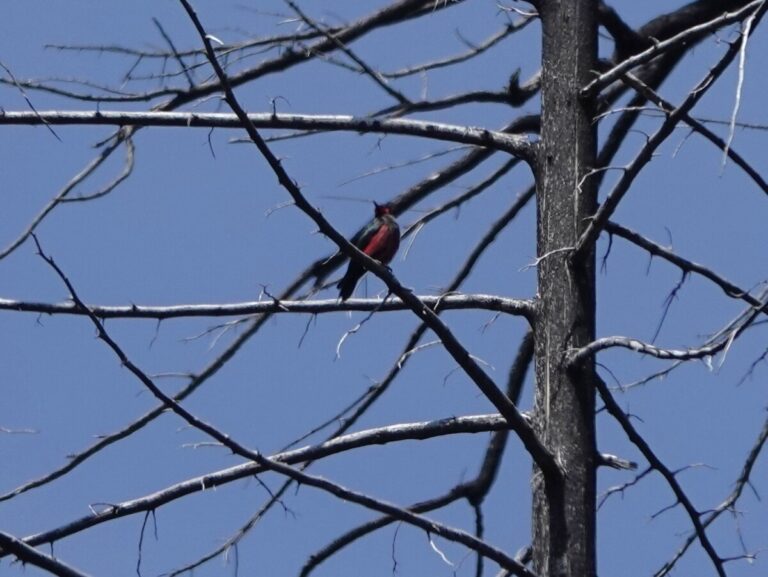
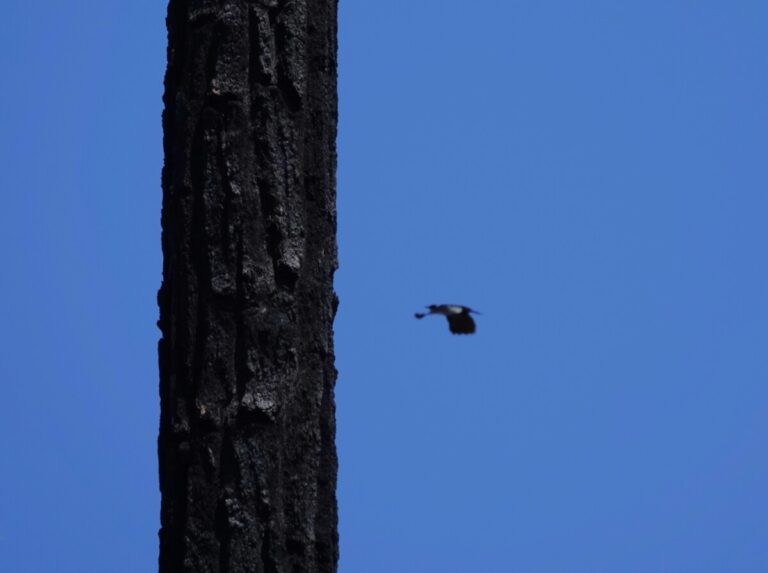
I arrived at the site nine days later, June 23, just after noon at the east edge of the stand where we had viewed them previously. This mid-day arrival had the purpose of 1) matching the timing of our previous observation, and 2) targeting a time when insects would be flying, increasing the likelihood of observing Lewis’s Woodpeckers flycatching. Two Lewis’s Woodpeckers were observed within minutes of my arrival. They exhibited the same behavior we saw on the field trip: flycatching for 5-10 minutes, then flying southwest out of sight. This was a strong indication that they were gathering insects and taking them to a nest.

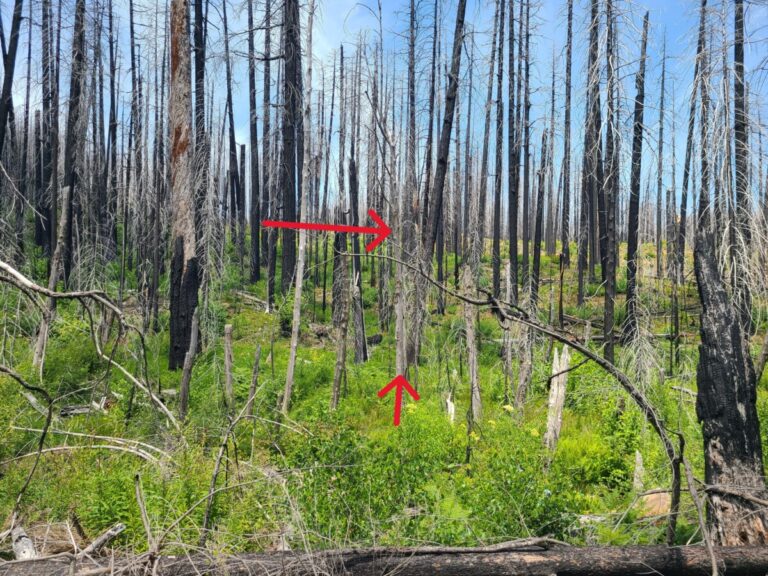
In order to get a better view of their flight path, I drove farther up the road to a higher elevation spot with a good view of the stand. I watched and waited. The woodpeckers again appeared at the east edge of the stand (where I had first parked) high near the tops of the large dead trees. One flew southeast after about 5 minutes, the other after about 10 minutes. Each bird flew only about 200 yards southwest at what would have been mid-canopy level, then dove sharply down into the stand; another strong indication of a nest tree. I triangulated an approximate location on my OnX Hunt app and decided to walk in from the bottom, just south of Kelly Creek. So I drove back to the east side of the stand.

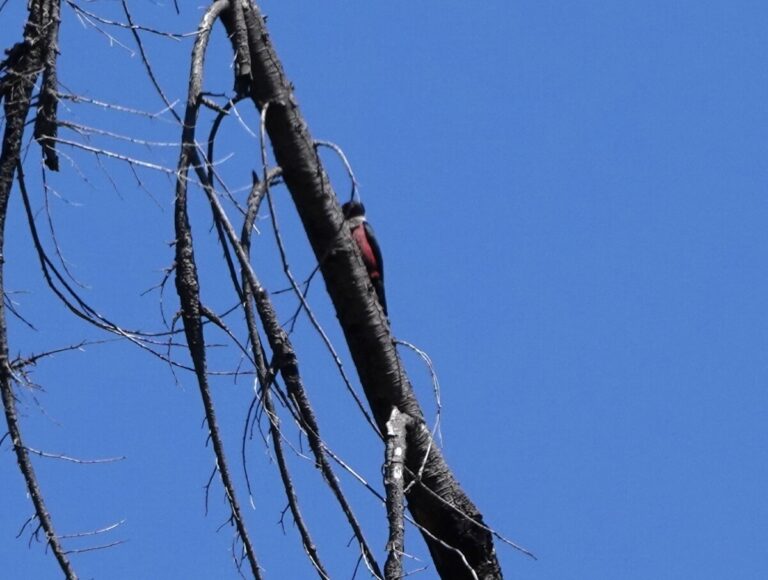
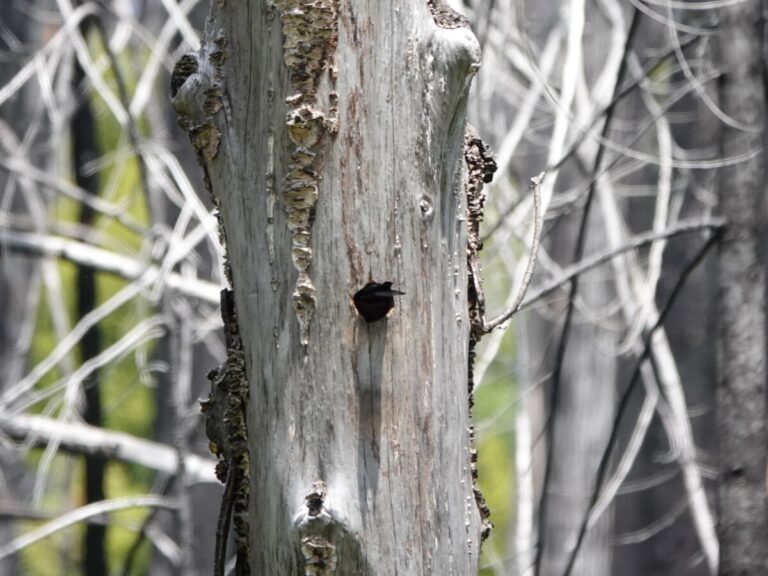
This time I parked just on the south side of Kelly Creek and hiked west from there. In only about 10 minutes I found a location with a good view of my triangulated spot and waited. In less than a minute the first adult Lewis’s Woodpecker arrived on the side of a tall dead deciduous tree, quietly calling, with a wad of insects in its bill. It then entered a cavity in the tree for less than a minute then flew out again. In my experience, most woodpecker nestlings are quite loud, at least when they are larger. I could hear no nestlings, so I wondered if the nestlings were quite small or if the nest had failed and this pair had not yet accepted this fate. I hoped for the former. 

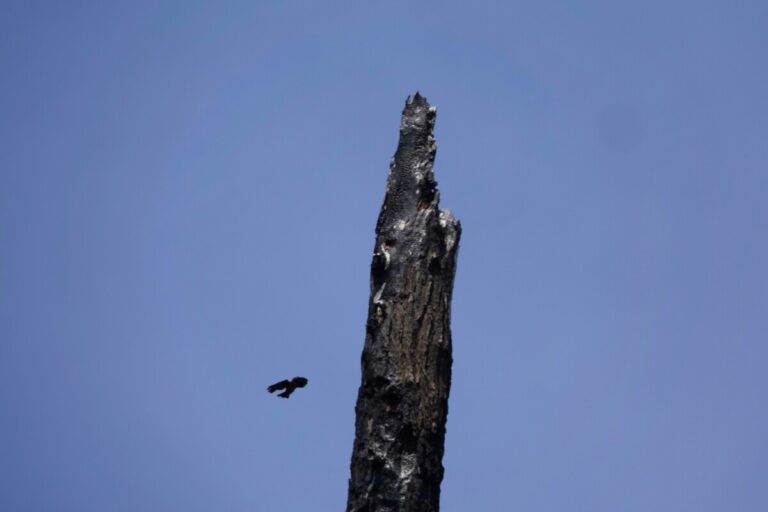
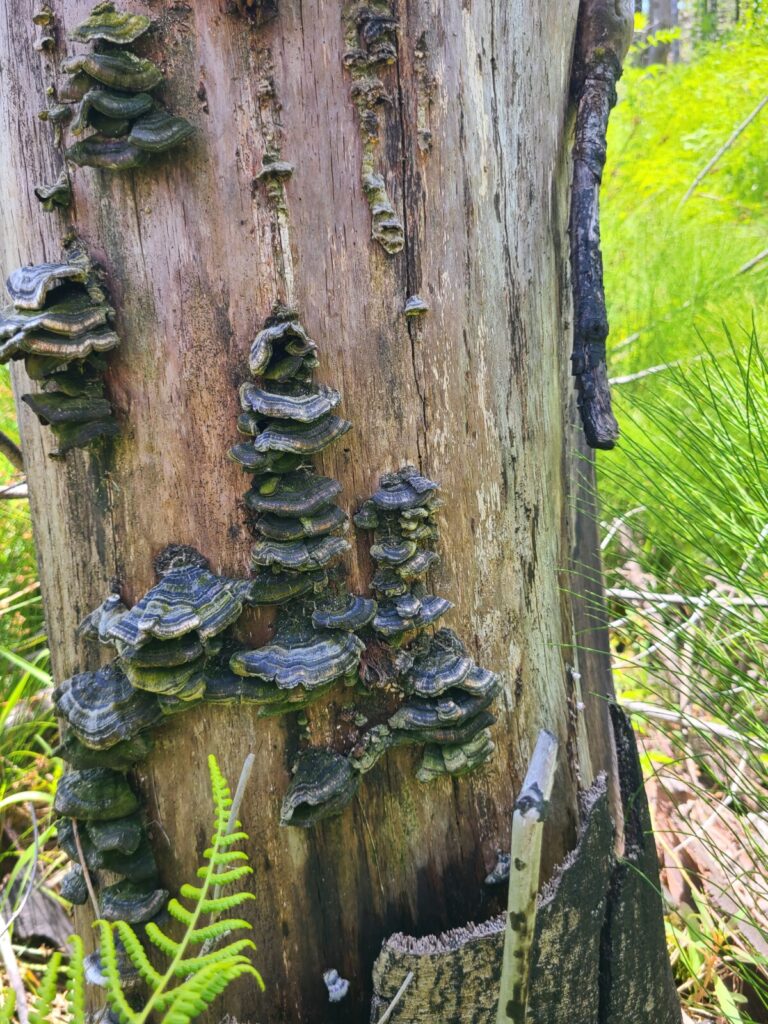
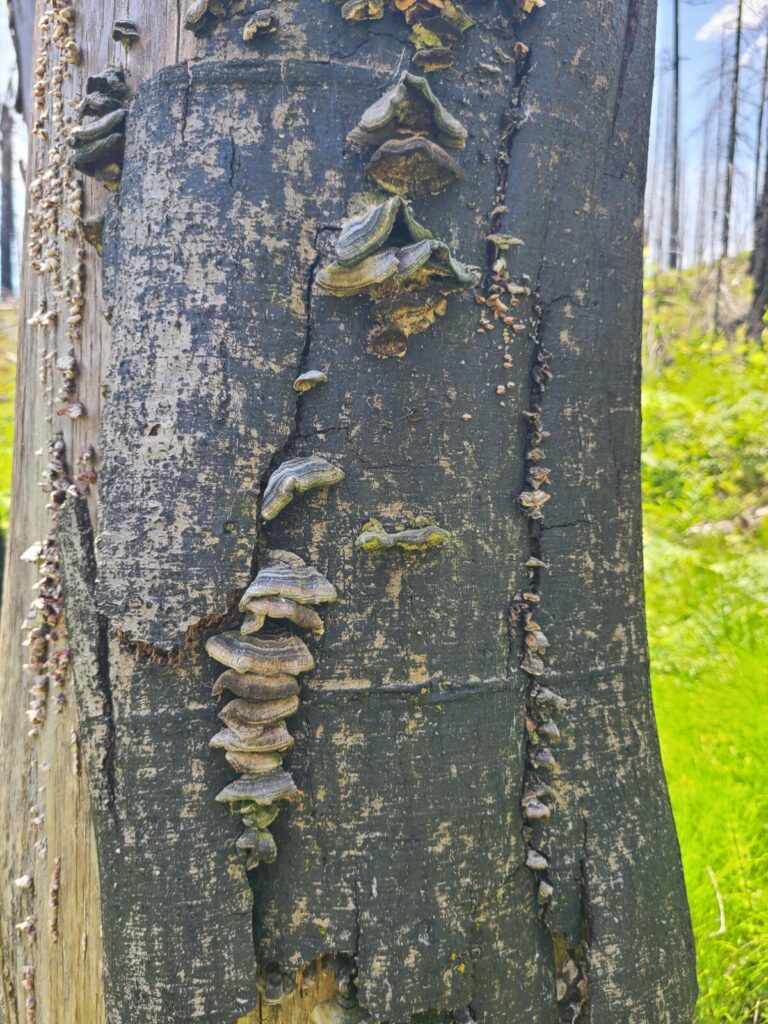
I stayed at the site, watching, photographing and video recording for about an hour and a half. The entire time the adults continued to return to the nest about every 5-10 minutes. They would sometimes fly directly into the nest cavity. Other times they would land on the nest tree, calling, then enter the cavity fully. A few times it appeared that an adult would obtain a stashed item from within some remnant bark or shelf fungi on the nest tree within a few feet of the cavity. After entering the cavity with food items, I could see that most of the time they exited without anything in their bill. This made me hopeful that there were small nestlings inside consuming the food provided, but still I heard no nestlings. However, a couple times the adults came out of the cavity with a wad of something and flew away with it. It appeared to be dark fine material such as a wad of debris or insects versus pale like a fecal sac. I did not determine what the material was. 

The adults would sometimes forage within 20-40 yards of the nest, while other times they would fly back to the east side of the stand where I presumed they were flycatching from high in the trees again. At one point when both adults seemed to have gone a distance from the nest, I walked to the base of the nest tree to take a few quick measurements and photos of the nest tree.

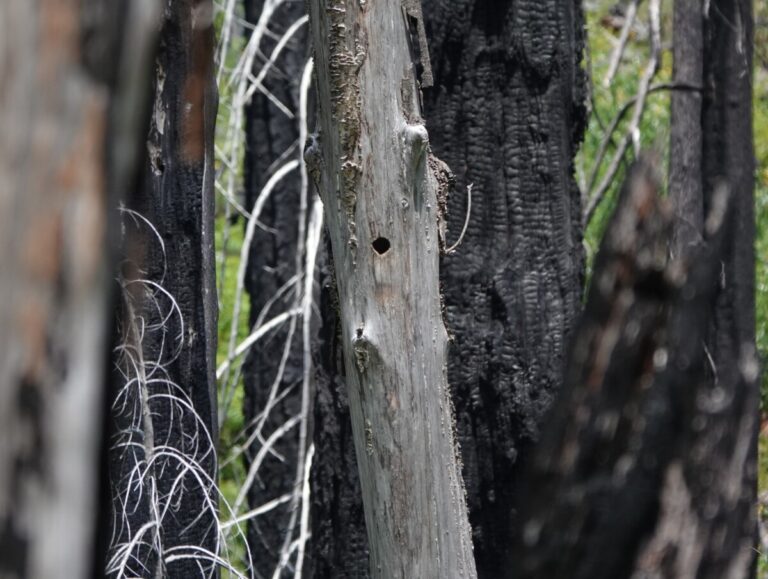
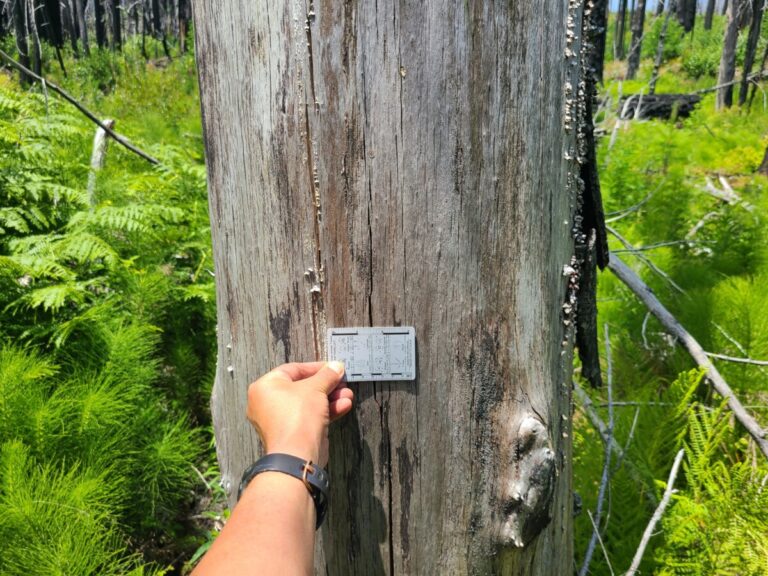
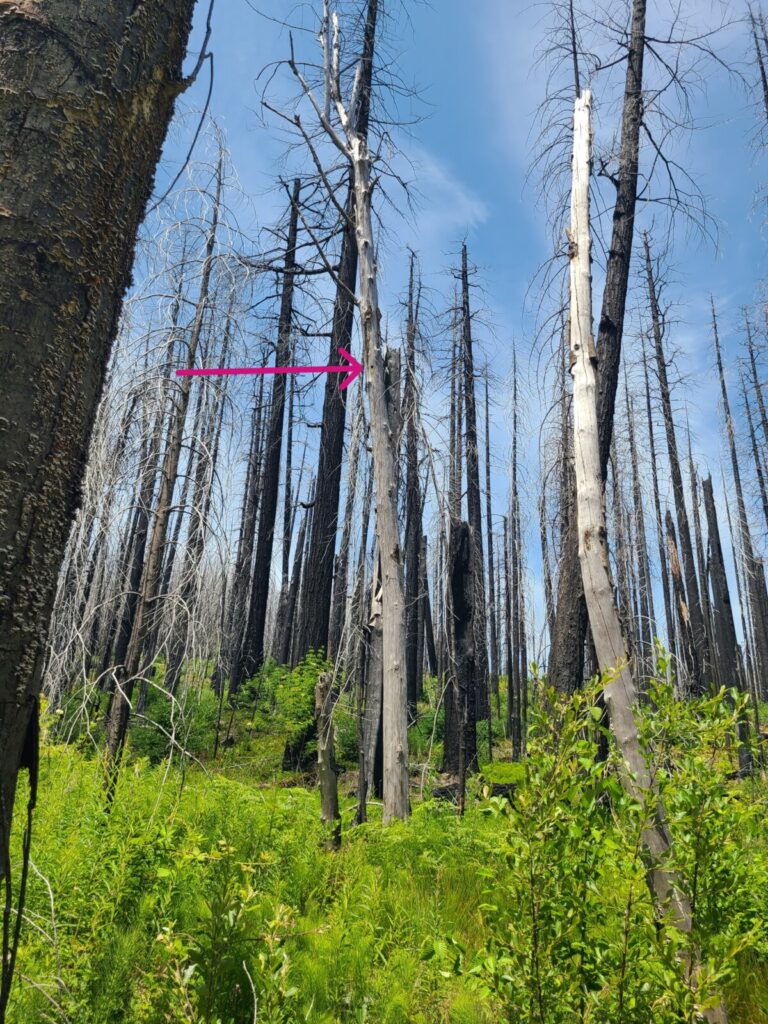
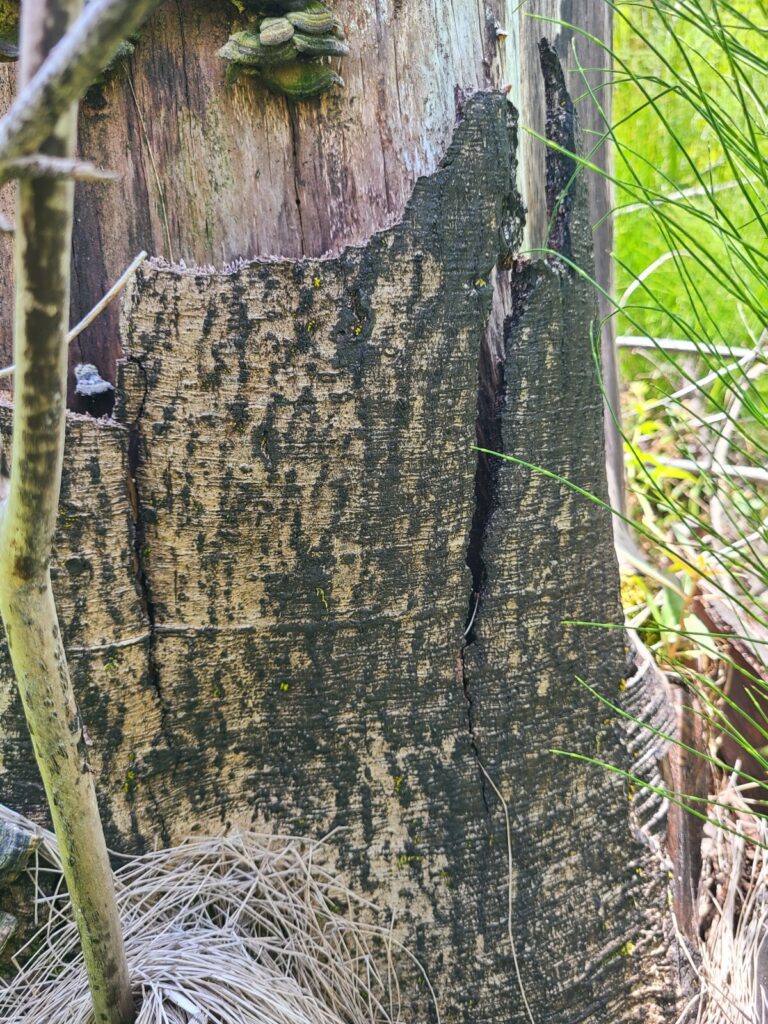
The nest tree was a dead, mostly barkless, broadleaf tree, about 75 ft tall and 15 inch dbh. Some bark remained on the lower bole. The color, texture, and pattern of the bark indicated it was an alder (Alnus sp.), either red alder (Alnus rubra) or white alder (Alnus rhombifolia). The cavity faced roughly south, was approximately 35 ft up, and looked like an old flicker hole, though it had an odd diamond shape to it. The snag was located approximately 20 ft north of Kelly Creek. It was a lovely location with abundant berry-producing shrubs in the area, including whitebark raspberry, red huckleberry, salal, trailing blackberry, wild strawberry, bitter cherry and blue elderberry. With at least a nesting attempt confirmed, I decided to leave and come back another day to try to confirm nestlings or fledglings.

I returned about two weeks later on July 8, entering the stand the same way I did last time. This time I arrived early, shortly after 07:00, as the days had been blazing hot. The birds were immediately present near the nest and acknowledged my presence with their quiet, somewhat raspy calls (link to video at end). I sat down and watched. I could hear at least one young in the nest cavity. Yay! Adults continued to bring food from near and far and this time only poked their head in to deliver food. No nestlings appeared at the cavity entrance, so I presumed that the young were either still quite small or the cavity was quite deep, or both. I continued to observe, photograph, and record video, again for about an hour and a half, then left the area.

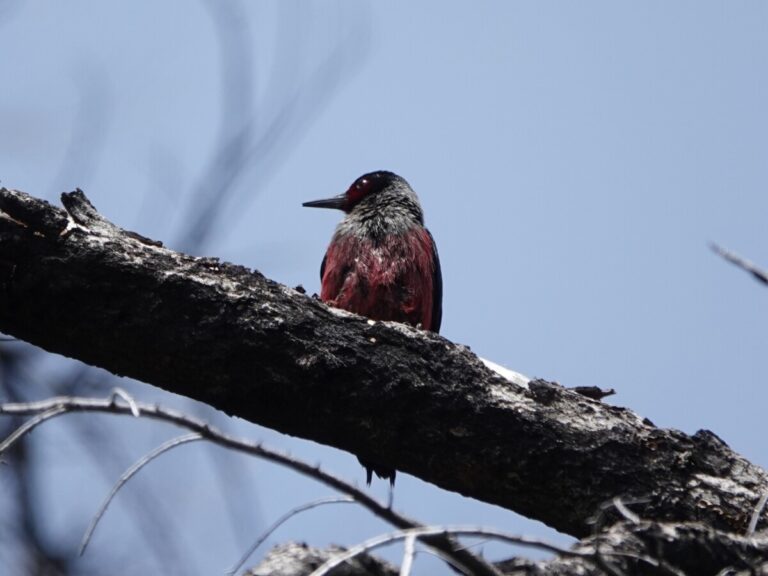
I returned again on July 17, hoping to confirm fledglings. It was again forecast to be a hot day so I arrived at 08:00. Upon reaching the vicinity of the nest tree I could see four Lewis’s Woodpeckers wandering around the stand. After watching for some time I could discern that each adult was basically tending to one of the fledglings. Sometimes the fledglings would follow the adults around, begging. Sometimes they would just perch somewhere and wait for the adult to return with food. Sometimes the juvenile would give a grating trill call. During the two hours I was there, only once did they all converge at the nest tree, and only for about a minute, before dispersing again. I was not near the nest at the time so did not capture that moment. The juveniles were mostly dark, without the nice gray color or reddish face of the adults. Due to their frequent movement I was not able to get a diagnostic image of the fledglings. Nevertheless, feeling satisfied that I had accomplished my desire to verify nesting and fledging, I left the area and did not return in 2025.

Does This Mean Something?

What does the discovery of one nest mean? Does it change our understanding of the status of Lewis’s Woodpecker in the Umpqua Basin or in Oregon? Well, by itself, not necessarily. Could it be part of a broader change? Perhaps.

Let’s consider some other recent observations. During 2024-2025 several other nests or juveniles were found west of the Cascades summit in Oregon, to my knowledge the first reports in decades. In summer 2024 a nest cavity with adults bringing food was found in the Lane County Cascades along the South Fork McKenzie River near its confluence with the McKenzie River (Cannon and Cannon 2024, Brinco 2024). That same summer in Clackamas County a pair of adults with a juvenile was photographed in the Cascades (Weatherall et al. 2024) and a juvenile was well-described just south of Molalla (Blowers 2024). Although no nests were observed in either of the latter reports, a juvenile present in late July could indicate nesting took place nearby, though dispersal from farther away cannot be ruled out. In summer 2025, a nest was again located along the lower South Fork McKenzie River about 100-200 yards from the 2024 nest (K. Vale pers. comm. 2026). In addition, four nests were found in the high Cascades of Marion County about 5 miles WNW of Mt. Jefferson (Gerig 2025). Gerig observed many Lewis’s Woodpeckers from May through August in the general area between the Cheat Creek and Whitewater Creek trailheads along Whitewater Creek Road (FS road 2243). 

Lewis’s Woodpeckers have long been known to have a breeding association
with recently burned landscapes (Abele et al. 2004, Welch 2024), but
also utilize riparian areas and oak woodlands (Galen 2003). Most of the above observations and the present nest were located in large areas burned 4-8 years prior. The Molalla juvenile was in a valley edge oak and farmland mosaic. The nests presented here and the nest described in this post represent the only documented nests I am aware of in western Oregon for many decades. Could this be just a coincidence, or is there a larger change happening? Please comment or contact me if you are aware of other nesting events west of the Cascades summit.

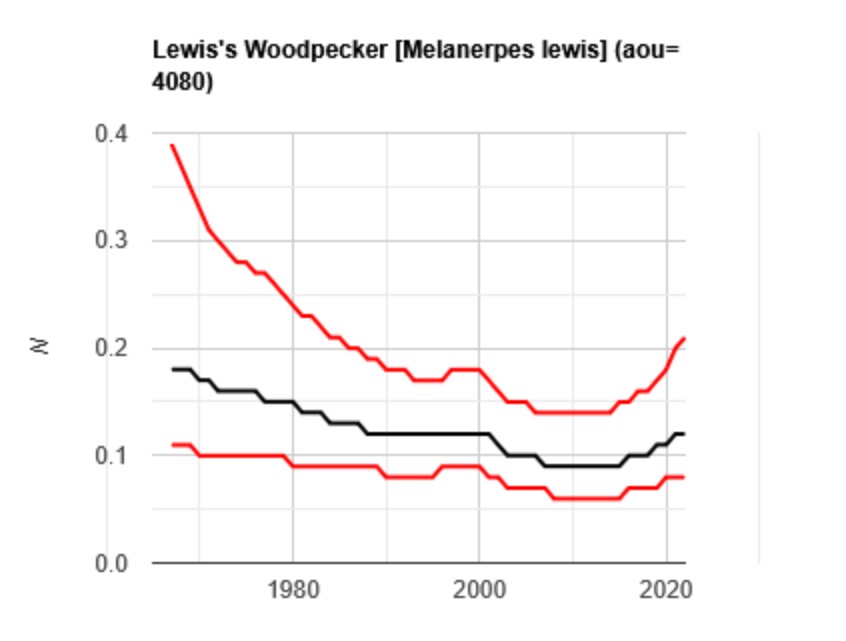
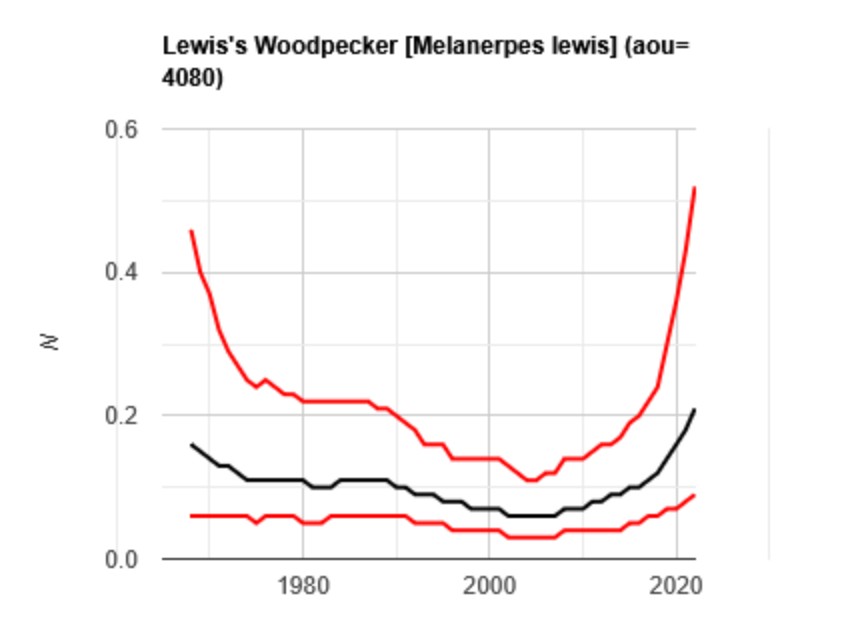
The graphs below were obtained from Ziolkowski et al. (2022) and show estimated population indices for Lewis’s Woodpecker from 1966-2022, range-wide on the left and Oregon on the right. Black lines indicate mean estimates, while red lines show 95% credible intervals (a Bayesian analogue to confidence intervals). The graphs suggest a possible population increase in the last few years following a long-term decline. However, the credibility rating given for these trend estimates is relatively low. This means that the trend estimates are based on very few data points and might not fully communicate the true population trend; an unfortunate statistical reality. Additional monitoring methods beyond the Breeding Bird Survey would be useful to better characterize Lewis’s Woodpecker population trends.

The occurrence of recent nesting evidence, along with (albeit questionable) Breeding Bird Survey trend analyses raise some interesting questions. Are Lewis’s Woodpeckers actually increasing in population in Oregon? Have the large fires in the western Oregon Cascades over the last decade provided opportunities for expansion of the Lewis’s Woodpecker? What would a thorough survey of these large fire areas reveal? Are Lewis’s Woodpeckers beginning to make a comeback west of the Cascades? Will Lewis’s Woodpeckers recolonize western Oregon? Would salvage logging affect the likelihood of their expansion and recovery? What is a better method of monitoring Lewis’s Woodpecker populations in Oregon? I think it is worth developing and testing hypotheses addressing these questions. But the first order of business might be to intentionally survey some of these west-side burns and nearby habitats to see how many Lewis’s Woodpeckers are present. Let me know what you think in the comments or send me a note.

For more observations and insights on wildlife in the Umpqua Basin, see:

Youtube: https://www.youtube.com/@umpquabasinwildlife

Facebook: https://www.facebook.com/UmpquaBasinWildlife

Sources Cited

Abele, S.C., V.A. Saab, and E.O. Garton. (2004, June 29). Lewis’s Woodpecker (Melanerpes lewis): a technical conservation assessment. USDA Forest Service, Rocky Mountain Region. Available: https://www.fs.usda.gov/rm/pubs_other/rmrs_2004_abele_s001.pdf [Accessed February 20, 2026]

Blowers, J. 2024. eBird checklist S116024968. eBird, Cornell Lab of Ornithology, Ithaca, New York. https://ebird.org/checklist/S116024968 [Accessed February 18, 2026]

Brinco, A. 2024. eBird checklist S194894235. eBird, Cornell Lab of Ornithology, Ithaca, New York. https://ebird.org/checklist/S194894235 [Accessed February 18, 2026]

Cannon, M, and B. Cannon. 2024. eBird checklist S182793719. eBird, Cornell Lab of Ornithology, Ithaca, New York. https://ebird.org/checklist/S182793719 [Accessed February 18, 2026]

Gabrielson, I.N. and S.G. Jewett. 1940. Birds of Oregon. Oregon State College.

Galen, C. 2003. Lewis’s Woodpecker (Melanerpes lewis) In Birds of Oregon: A General Reference. D.B. Marshall, M.G. Hunter, and A.L. Contreras, eds. Oregon State University Press, Corvallis, OR.

Gerig, R. 2025. Personal communications and many eBird checklists in eastern Marion County, June 3 to July 30, 2025. eBird, Cornell Lab of Ornithology, Ithaca, New York. [Accessed February 18, 2026]

Gilligan, J., M. Smith, D. Rogers, and A. Contreras. 1994. Birds of Oregon: Status and Distribution. Cinclus Press.

Hunter, M.G., M.M. Sawyer, R. Maertz, B. Kruse, K. Wilson. 1998. Birds of Douglas County, Part 3: the hundred valleys of the Umpqua. Oregon Birds 24(4):103-117.

North American Bird Conservation Initiative (NABCI). 2025. The State of the Birds, United States of America, 2025. www.stateofthebirds.org/2025 [Accessed February 21, 2026]

Oregon Department of Fish and Wildlife (ODFW). (2021). Oregon sensitive species list. Oregon Department of Fish and Wildlife. https://www.dfw.state.or.us/wildlife/diversity/species/docs/Sensitive_Species_List.pdf [Accessed February 21, 2026]

Smithsonian Institution Archives. Ira Noel Gabrielson Papers. Record Unit 7319. Washington, D.C. https://siarchives.si.edu/collections/siris_arc_217475 [Accessed February 18, 2026]

Weatherall, K., C. Dark, and R. Dark. 2024. eBird checklist S189724291. eBird, Cornell Lab of Ornithology, Ithaca, New York. https://ebird.org/checklist/S189724291 [Accessed February 18, 2026]

Welch, B. 2024. Post-fire vegetation and pyrodiversity influence breeding abundances of Lewis’s Woodpeckers in the eastern Cascades, Oregon. Master’s thesis, California State Polytechnic University, Humboldt. https://digitalcommons.humboldt.edu/etd/755/ [Accessed February 18, 2026]

Sauer, J. R., D. K. Niven, J. E. Hines, D. J. Ziolkowski, Jr, K. L. Pardieck, J. E. Fallon, and W. A. Link. 2019. The North American Breeding Bird Survey, results and analysis 1966 – 2019. Version 2.07.2019 USGS Patuxent Wildlife Research Center, Laurel, MD. https://www.mbr-pwrc.usgs.gov/bbs/trendmap19/trendhelp19.html [Accessed February 19, 2026]

U.S. Fish and Wildlife Service (USFWS). 2021. Birds of conservation concern 2021. United States Department of Interior, Fish and Wildlife Service, Division of Migratory Bird Management, Arlington, VA. https://www.fws.gov/sites/default/files/documents/birds-of-conservation-concern-2021.pdf [Accessed February 20, 2026]

Vale, K. Email to author, February 27, 2026. Assistant Wildlife Biologist, McKenzie Ranger District, Willamette National Forest. U.S. Forest Service.

Ziolkowski, D.J., Lutmerding, M., English, W.B., Aponte, V.I., and Hudson, M-A.R. (2022). North American Breeding Bird Survey trend and annual index estimates, 1966–2022. U.S. Geological Survey, Eastern Ecological Science Center. https://www.mbr-pwrc.usgs.gov/ [Accessed February 20, 2026]
This Post Has 3 Comments

  1. Mike Unger

    Excellent and thorough research on Lewis’s Woodpeckers! Your photo documentation is great as well. We occasionally spot them during our bird walks at Ankeny NWR, and we counted 18 individuals at Bald Hill Farm near Corvallis in October 2023. However, we’ve never observed any signs of nesting, so it’s exciting to hear about them nesting in the Umpqua Basin.

  2. Jim Scott

    Matt, congratulations on your research. Looking back in my records, I only found one sighting of Lewis’s Woodpeckers in Douglas County, which was along Mel Creek Road in Elkton on Feb 2nd 2012. It was in a grove of Oak trees as I remember on private property. We did not notice any nesting activity. Here is our checklist.

    https://ebird.org/checklist/S9745402

    1. Matt Hunter

      Hey Jim! That’s cool to have one near the Coast Range as that seems to be an area they don’t visit often!

Leave a Reply